Main concepts and terms of the OCP program
Capture
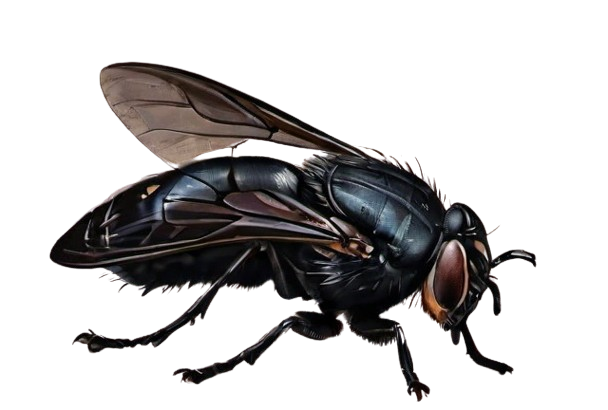
Adult blackflies are collected by trappers placed at selected points. They collect biting females that come to take their blood meal before they have had time to bite them. Capture is carried out between 7 a.m. and 6 p.m. (11 hours per day) and allows a daily biting rate (DBR) to be established. Each fly is collected and kept alive in an individual tube for later identification and possible dissection.
At the end of the day, the blackflies are sent to the sub-sector (initial OCP zone) with a detailed form. This form contains: - The total number of flies captured by the team, recorded hour by hour - The results of the searches for the pre-imaginal stages - The readings of the hydrometric scales - The weather conditions of the day
In the sub-sector laboratory, samples are processed according to a standardized protocol:
- Morphological identification of females of the S. damnosum complex
- Dissection to determine physiological age
- Search for O. volvulus larvae
- Calculation of entomological transmission indices
Reach
For the purpose of insecticide treatments, the rivers were subdivided into sections called BIEFs. They were not all the same length.
The program covered approximately 1.2 million square kilometers, encompassing the main river basins of the region: - The Volta Basin (Black Volta, White Volta, Red Volta) - The Niger Basin and its tributaries - The coastal basins (Bandama, Comoé, Sassandra) - The Senegal and Gambia basins
Insecticide
The insecticides used in the OCP program are carefully selected for their effectiveness against blackfly larvae while minimizing environmental impact. Product selection was based on strict safety and efficacy criteria. The main insecticides used include temephos (Abate®), phoxime, B.t. H-14, and permethrin.
These insecticides are applied as larvicides directly into waterways, specifically targeting blackfly breeding sites. Application is carried out by air or ground, depending on site accessibility and hydrological conditions.
Insecticide rotation
Insecticide rotation is a key strategy to prevent the development of resistance in blackfly populations. This approach involves systematically alternating different types of insecticides according to a set schedule, based on monitoring data and seasonal patterns.
The rotation program takes into account several factors: the season (dry season vs. wet season), river flow, the sensitivity of the simulated populations to different insecticides, and environmental and financial considerations. This approach has maintained the program's effectiveness for more than 30 years.
Blackfly species
The blackfly species targeted by the OCP program primarily belong to the Simulium damnosum complex. Understanding the biology and ecology of these species is crucial to the success of control strategies. The S. damnosum complex includes several species that are morphologically similar but may have distinct behaviors and capabilities.
The main species of the S. damnosum complex found in the OCP area include S. sirbanum, S. sanctipauli, S. soubrense, and S. yahense. Each species has its own ecological characteristics, particularly in terms of habitat preferences for breeding, flight distance, and stinging behavior. This diversity requires a tailored approach to the control of each species.
Morphological Identifications: At the beginning of the OCP, the identification of blackflies was mainly based on the color of the wing tufts. They were assigned the codes 01, 02, 03, 04 and 05, which only concern the wing tufts of blackflies, from lightest to darkest.
Later the techniques evolved with the introduction of 4 other criteria as described on page 121. Thus the identification with codes 06, 07 and 08 were added:
- Savanna blackflies: (Simulium damnosum sensu stricto and Simulium sirbanum): Code 06
- Forest blackflies (Simulium squamosum, Simulium sanctipauli, Simulium soubrense), this group is also called underqoué. Code 07
- Forest blackflies (Simulium yahense only) code: 08
Caution: The identification is morphological! This has nothing to do with morphometric identification. Morphometry has not been used routinely but only for research purposes.
Catégorie de Point de capture
OCP had categorized the capture points as A, B, and C. This ranking was assigned at the beginning of each year.
A non-declassified point, of category A, is visited every week, that of category B is visited once every 2 weeks and that of category C is visited occasionally (on request).