The Onchocerciasis Program and entomological data
Vector Control Unit
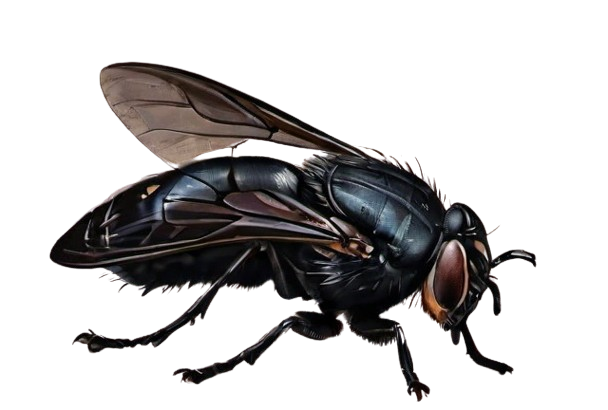
Since the beginning of the Programme, the basic operational strategy has focused on the control of the vector, the blackfly. The APG Mission had clearly stated that to achieve its objective, the proposed programme should be essentially based on the destruction of the vector and the subsequent interruption of disease transmission. Vector control, based on aerial larviciding of blackfly breeding sites, has therefore remained the essential weapon of OCP's control operations.
The Vector Control Unit had four main functions: (i) to conduct entomological surveillance to guide aerial operations based on the presence or absence of blackfly larvae in breeding sites and infective blackflies; (ii) to conduct aerial larviciding to interrupt transmission of infection and ultimately achieve the virtual elimination of the human reservoir of the parasite; (iii) to observe the possible environmental effects of OCP operations and, if necessary, make adjustments to avoid damage to non-target wildlife; and (iv) to organize research on the disease vector to improve control effectiveness, as well as on insecticides and their formulations to achieve optimal cost-effectiveness of larviciding treatments and to improve the Program's ability to combat insecticide resistance.
Entomological surveillance network
Entomological surveillance is based on a system of sectors and sub-sectors extending throughout the program, with the sub-sectors grouped around the sectors and supervised by their staff. The sectors and sub-sectors are responsible for determining, at different levels of competence, the absence or presence of blackfly larvae in breeding sites and of infective blackflies; capturing blackflies for identification and dissection to determine their infectivity based on the presence or absence of larval stages of Onchocerca volvulus; reading flood gauges to set the frequency and periodicity (usually weekly) of larviciding; and finally, evaluating the impact of these applications. All these data are necessary for the execution of aerial operations. The Program has gradually used, in rivers, automatic devices linked to satellite radio transmitters for recording water levels and flows. Each sector has a staff of 15 to 25 entomologists, laboratory technicians, vector catchers, radio operators, secretaries, drivers/mechanics and guards, while a sub-sector has a staff of 10 to 20 people. The sectors and sub-sectors are equipped with radiotelephones allowing direct communication with OCP headquarters. They also have motor vehicles at their disposal. The entomological network expanded rapidly to the point that by the end of the 1970s, there were 6 sectors and 22 sub-sectors in the initial area of the Program, increased by the Southern Extension Zone where an entomological surveillance network was established in 1978. In total, nearly 400 watercourses were monitored for the presence of blackfly larvae, and more than 650 capture points were regularly visited by catchers. With the reduction of vector control in the initial OCP area, the number of sectors and sub-sectors (including those in the Southern Extension Zone) was reduced to 4 and 14 respectively in 1994, while in the entomological network of the Western Extension Zone, a total of 2 sectors and 13 operational bases (Sub-sectors) has been reached since 1986, when the Programme began operations in this region. For operational purposes, the OCP area is divided into an Eastern Operational Zone with headquarters in Kara (Togo) and a Western Operational Zone with operations headquarters in Bamako (Mali). (See map of OCP Programme Phases)
Mapping and deployment of operations
In each area, the start of vector control operations was preceded by an inventory and mapping of all Simulium damnosum breeding sites during the dry season and during flood periods. This task was greatly facilitated by helicopter reconnaissance operations, which also provided access to sections of rivers that could not be reached by road. Aerial larviciding was gradually introduced throughout the Programme area. The first aerial spraying base was established in Bobo-Dioulasso (Burkina Faso) in October 1974. Operations began in February 1975 in the Phase I area, which included western Burkina Faso, northern Côte d'Ivoire, eastern Mali, and northwestern Ghana. Treatments were then extended to Phase II in March 1976, which included the White Volta and Red Volta basins. By 1977, operations had reached Phase III, encompassing eastern Mali as far as the Niger River, northwestern Côte d'Ivoire, and northern Togo. The total area under treatment in this initial area was 654,000 km², with an additional 110,000 km² in southern Côte d'Ivoire during Phase IV in 1978/1979. By then, 18,000 km of rivers were under surveillance, protecting a population of 16.5 million people.
The first aerial spraying base was established in Bobo-Dioulasso, Burkina Faso, in October 1974. Operations began in February 1975 in the Phase I area, which included western Burkina Faso, northern Côte d'Ivoire, eastern Mali, and northwestern Ghana. Treatments were then extended to Phase II in March 1976, including the White Volta and Red Volta basins. By 1977, operations had expanded to Phase III, encompassing eastern Mali as far as the Niger River, northwestern Côte d'Ivoire, and northern Togo. The total area under treatment in this initial area was 654,000 km², with an additional 110,000 km² in southern Côte d'Ivoire during Phase IV in 1978-1979. As of that date, 18,000 km of rivers were under surveillance, protecting a population of 16.5 million people.
Insecticide management and coordination of operations
The decline in susceptibility to temephos, a larvicide used exclusively for several years, led to a major reorientation of control strategies around 1980. Initially, OCP focused largely on the selection of new larvicidal compounds in close collaboration with the program responsible for vector biology and vector control at WHO headquarters. To address the decline in susceptibility to temephos, OCP established a specialized insecticide selection unit: IRU (Insecticide Research Unit), based in Lomé (Togo) in 1981/1982, then transferred to Bouaké (Côte d'Ivoire) in 1986. This unit, composed of three professionals and their assistants, subjects potential insecticide compounds supplied by pharmaceutical companies to laboratory and river tests, after their analysis and selection by competent staff at WHO headquarters.
Aerial operations are coordinated from OCP headquarters in Ouagadougou via a sophisticated radiotelephone system linking the entomological surveillance network to the Vector Control Unit (VCU). Every Monday morning, the VCU team analyzes the previous week's surveillance data and hydrological surveys. Aerial operations managers then calculate the quantities of insecticide to be applied at each drop point based on river flow rates, and detailed flight plans are prepared accordingly. This weekly planning makes it possible to precisely determine the areas to be treated and the required insecticide dosages, and to establish detailed flight plans.
Logistics also included managing a network of fuel and insecticide refueling points, strategically placed throughout the program area. This organization allowed for optimized flight times and ensured efficient coverage of all areas to be treated.
This entire process has been gradually computerized to optimize the effectiveness of interventions.
The air fleet, initially based at Bobo-Dioulasso Airport (Burkina Faso) and Tamalé (Ghana), but which has been located since 1983 at Kara (Togo) and Odienné (Ivory Coast), comprised a maximum of eleven helicopters (the actual number depending on the season), and until 1992, there were also two spraying aircraft and a liaison aircraft. The fleet, its pilots and mechanics are assigned to the OCP under a three-year commercial contract, signed with an aerial spraying company, following a call for tenders.
Insecticide resistance
Although vector control continued uninterrupted at OCP for over 20 years and was generally successful, the operations were not without problems. A decline in the susceptibility of Simulium to the larvicides used by the Programme was observed very early after the start of operations. This was first recorded in southern Côte d'Ivoire (where operations had begun in 1978) after a year of regular temephos treatments: it was an increased tolerance in S. sanctipauli, a species found in forest areas. The replacement of temephos with chlorphoxime allowed the situation to return to normal in this area. In 1983, S. squamosum became resistant to temephos in the same area and had to be tackled by aerial spraying of Bacillus thuringiensis (B.t. H-14). The resistance problem remained stable and limited until 1985, when a decline in the susceptibility of S. soubrense/S. sanctipauli to temephos was detected in the South and West Extension Zones prior to the application of this product in these areas by the Programme. In addition, the susceptibility of savannah species to temephos was found to be relatively low on the Gambia-Senegal border, where OCP had not undertaken larvicide treatment. In 1986, the first year of the third financial phase, resistance of savannah vector species to organophosphates spread to Ghana, eastern Mali, and the Extension Zones, necessitating the use of alternative larvicides. Resistance in savannah species has remained limited to temephos and chlorphoxime (both organophosphates) and has not spread to permethrin (a pyrethroid), carbusulfan (a carbamate), or B.t. H-14 (a biological control agent). Since 1987, the Vector Control Unit has applied a system of rotating the available larvicides (including pyraclofos from 1990, and replacing chlorphoxime with phoxime), taking into account the efficacy of each product, the risk of adverse effects on non-target wildlife, stream flow, and the cost of the insecticide. Temephos is included in this rotation system. Through this system, OCP has successfully overcome potential and actual resistance issues that should no longer hamper progress in vector control across the Programme area.
(see graph Conditions of use of approved insecticides - flow rates, cost, non-target wildlife)
Coordination of operations and selection of insecticides
Since the decline in sensitivity to temephos, a larvicide used exclusively for several years, began to pose an operational problem around 1980, OCP devoted itself largely to the selection of new larvicidal compounds in close collaboration with the Vector Biology and Control Programme at WHO Headquarters. An OCP Insecticide Selection Unit, composed of three professionals and a few assistants, was set up in Lomé, Togo, in 1981/1982 and transferred in 1986 to Bouaké, Côte d'Ivoire, where it is still located. This unit subjects potential compounds supplied by pharmaceutical companies to laboratory and river tests, after their analysis and selection by competent staff at WHO Headquarters. The air fleet, initially based at Bobo-Dioulasso Airport (Burkina Faso) and Tamalé (Ghana), but since 1983 has been based at Kara (Togo) and Odienné (Côte d'Ivoire), comprises a maximum of eleven helicopters (the actual number depending on the season), and until 1992, there were also two spraying aircraft and a liaison aircraft. The fleet, its pilots and mechanics are assigned to OCP under a three-year commercial contract signed with an aerial spraying company following a call for tenders. Air operations are coordinated from OCP headquarters in Ouagadougou (Burkina Faso), using a radiotelephone system linking the entomological surveillance network to the vector control unit (VCU). Based on the monitoring results and flood gauge readings from the end of the previous week, VCU headquarters staff contact the zone, sector, and sub-sector managers every Monday morning to consult and make decisions regarding vector control operations for the following days, including the sections of rivers to be treated and the larvicides to be used. Those responsible for aerial operations then calculate the quantities of insecticide to be applied at each drop point based on river flows, and detailed flight plans are prepared accordingly. Recently, much of the detailed calculation and flight planning has been computerized. Logistics also included managing a network of fuel and insecticide refueling points, strategically placed throughout the program area. This organization allowed for optimized flight times and efficient coverage of all areas to be treated.
Environmental monitoring
The risk of adverse environmental effects, particularly on non-target organisms, from insecticides applied on a large scale by aerial means is a constant concern of the Programme. Until 1981, when a hydrobiologist was assigned to the vector control unit, monitoring was carried out under contract by scientific and technological institutions located inside and outside the Programme area. Since then, an environmental monitoring team based in Ouagadougou and composed of a hydrobiologist and four technicians coordinates OCP activities in this area and is directly responsible for invertebrate monitoring (at 12 locations in 1993), while national hydrobiological monitoring teams monitor fish populations at 12 stations in 1993.
Once a year, the Independent Ecological Panel meets to review and evaluate country and OCP environmental reports and to advise on the use of larvicides and further research needed.
Statistics and IT support
During the early years of OCP operations, data analysis was carried out by staff from the units responsible for collecting data on their respective field operations. The Action Plan and Budget for 1978 provided for a statistician position in the Director's Office. This position was transferred to the unit in 1980 and the incumbent, assisted by a programmer/analyst, was responsible for monitoring and evaluating entomological, hydrobiological and epidemiological data.
Biostatistics then became an essential component of epidemiological studies and evaluations. At the beginning of the Programme, the use of statistics was based on the traditional exploitation of data designed to provide quantified indicators such as prevalence and incidence and their evolution over time. These indicators reflected the epidemiological changes brought about by the Programme's operations and precisely indicated the areas where these operations had not produced the expected results.
The application of a mathematical model to real-life situations using field data collected and analyzed over several years was of crucial importance in developing OCP's long- and medium-term plans. One of the main conclusions of the model simulations was that 14 years of larviciding would be required to virtually eliminate the human reservoir of the adult onchocerciasis worm, a prediction on which the schedule for future operations was based.
However, most of the data processing and analysis work remained centralized at WHO Headquarters, where it was entrusted to a small team by OCP and supported by consultants. Data began to be processed on-site in Ouagadougou from 1980-1985. This justifies the period covered by this database. Data prior to 1985 could still be available at WHO Headquarters!
Furthermore, model predictions, confirmed by field trials, showed that community-based application of Ivermectin could halve the duration of larviciding operations needed to interrupt transmission.
With regard to IT support, BIS played an important role in setting up a Programme-wide computer and word processing network, as well as in training relevant staff at OCP headquarters and in the Programme's operational centres.